Author: Edith Wolf Perez
The exhibition "The Electric Body" at the Leopold Museum explores the relationship between medicine and art through works by Egon Schiele (1890-1918) and Erwin Dominik Osen (1891-1970). Works by the artists of Gugging are on display in the exhibition "gugging.! classic & contemporary", which spans five decades.
The Electric Body
The focus exhibition "The Electric Body" within the permanent presentation "Vienna 1900" offers an insight into the contacts that artists had with medical specialists at the time, both as collectors and as clients.
At the center are Osen's pictures of patients, which were recently discovered in the estate of the electropathologist and head of the neurological department at the Garrison Hospital II, Stefan Jellinek (1871-1969), and acquired by the Leopold Museum. The treatment of "war neuroses", which today are diagnosed as post-traumatic disorders, was often treated with electrotherapy during the First World War. Osen himself suffered from neurasthenia, which had intensified during his military service and brought him to the Garrison Hospital II for treatment in 1915. There he took portraits of patients who had been subjected to electrotherapy. These pictures of the men express their vulnerability and insecurity without make-up, as Osen removes his "models" from the hospital environment and concentrates entirely on their naked bodies, their deformed skulls, their distorted muscles, but also on their apathetic or disturbed looks. Only the "Lustknabe", a depiction that addresses the connection between diagnosed "nervous weakness" and homosexuality, is framed in color.
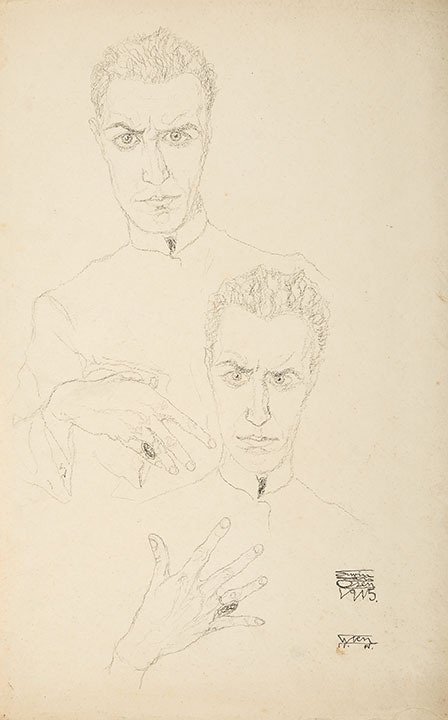
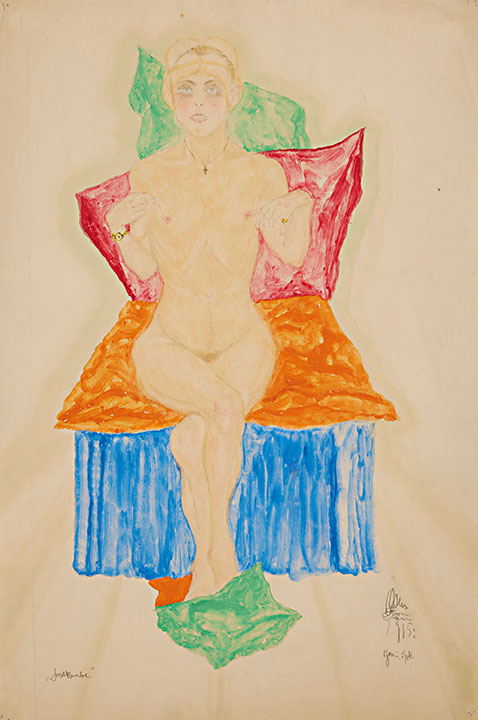
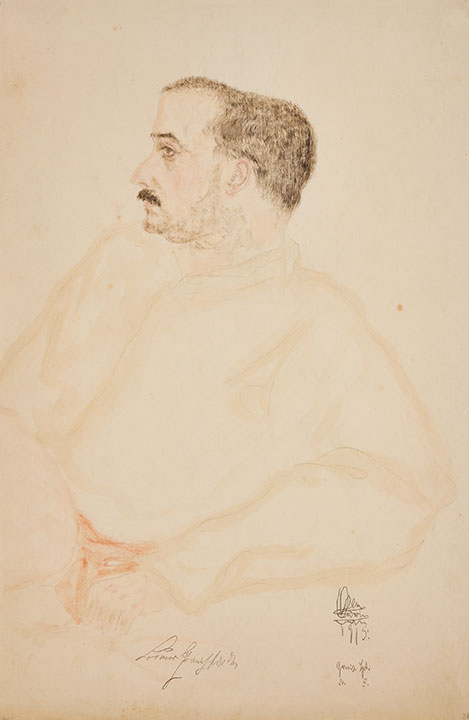
It is no longer possible to determine whether Osen's pictures in the Garrison Hospital were commissioned works or part of his own rehabilitation program. His 1913 portraits of patients in the psychiatric clinic Am Steinhof, on the other hand, were commissioned by the doctor Adolf Kronfeld to illustrate a lecture, as he felt that the drawings were a more faithful representation of his patients than a photograph.
In "The Electric Body", Osen's works are juxtaposed with Egon Schiele's paintings of pregnant women and newborns in the maternity ward of the Second Women's Hospital. The friendship between the two artists is also explored; for example, they both captured the dancer Mao Mandu on canvas.
"The Electric Body" is also available as a digital exhibition. (until September 26)
"gugging. classic & contemporary"
The works of the artists from Gugging have long since outgrown the clinical context and are recognized as Art Brut on the art market. "gugging. classic & contemporary" was opened online on May 6: "With this new exhibition, it was important for us to show what is happening in the House of Artists and in atelier gugging," said Johann Feilacher, artistic director of museum gugging. It can now be experienced live (hopefully continuously) until 2024. The incredible variety of works is what makes this show so exciting.
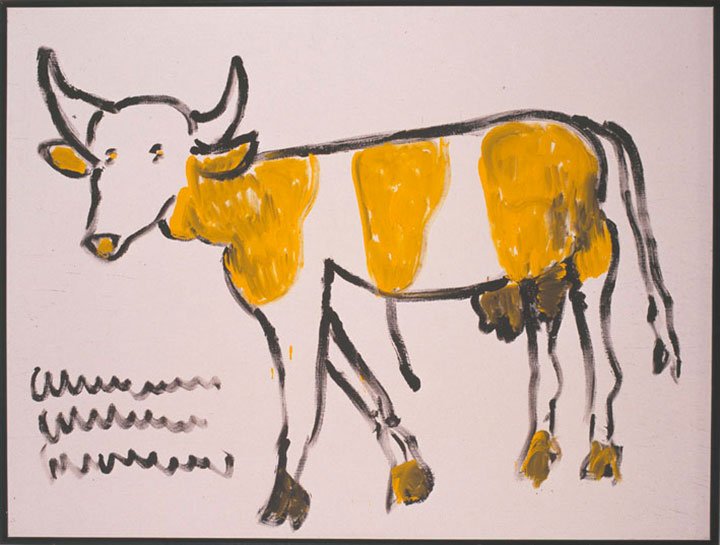
Be it the colossal images of women by Johann Hauser (1926-1996), the giant cows by Franz Kamlander (1920-1999) or the androgynous human images by Karoline Rosskopf (1911 - unknown), they and their colleagues Oswald Tschirtner, Philipp Schöpke and august Walla represent the creative range of this extraordinary collective of artists. The "classics" are juxtaposed with works by contemporaries such as Arnold Schmidt (1959) and Leopold Strobl (1960). His works have already met with an international response, for example at the Museum of Modern Art in New York City, which has already acquired works by him.